
Graffiti

Recycle Bin

 xroi.cc
 Note Graph
 Physical ffxiv triple triad cards
Welcome to a tutorial on how I made triple triad cards!
Here is the final result:
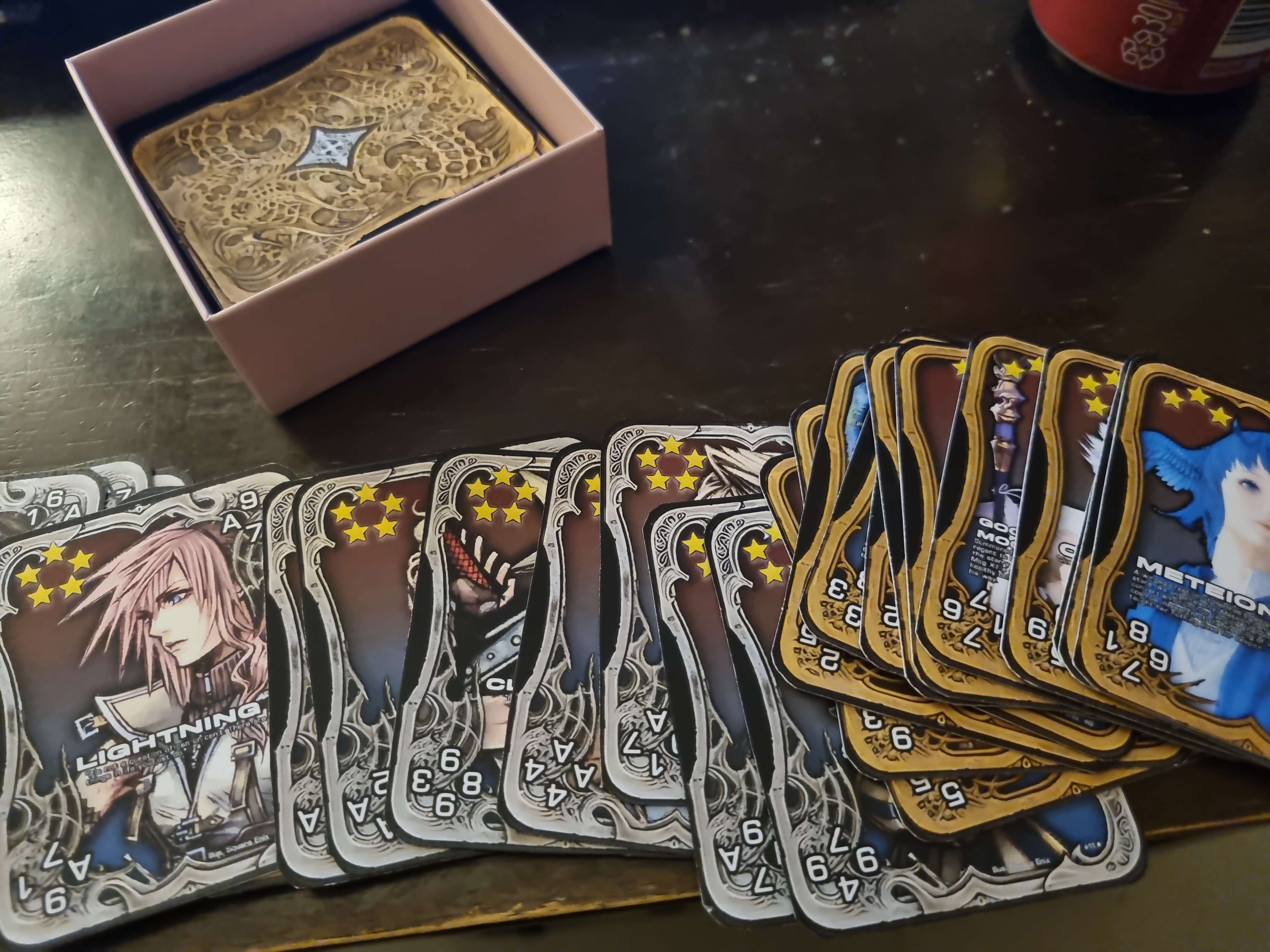
To design the cards I used a program called Card Engine. (15$ / 12.74$ - 2 year low discount on steam). This program had all the tools I felt were I needed (Especially layers, card templates and good asset management). I'm not sure if this is the best choice over other programs like Card Creator (40$ / 5.19$ - 2 year low discount on steam) or nanDECK (free).
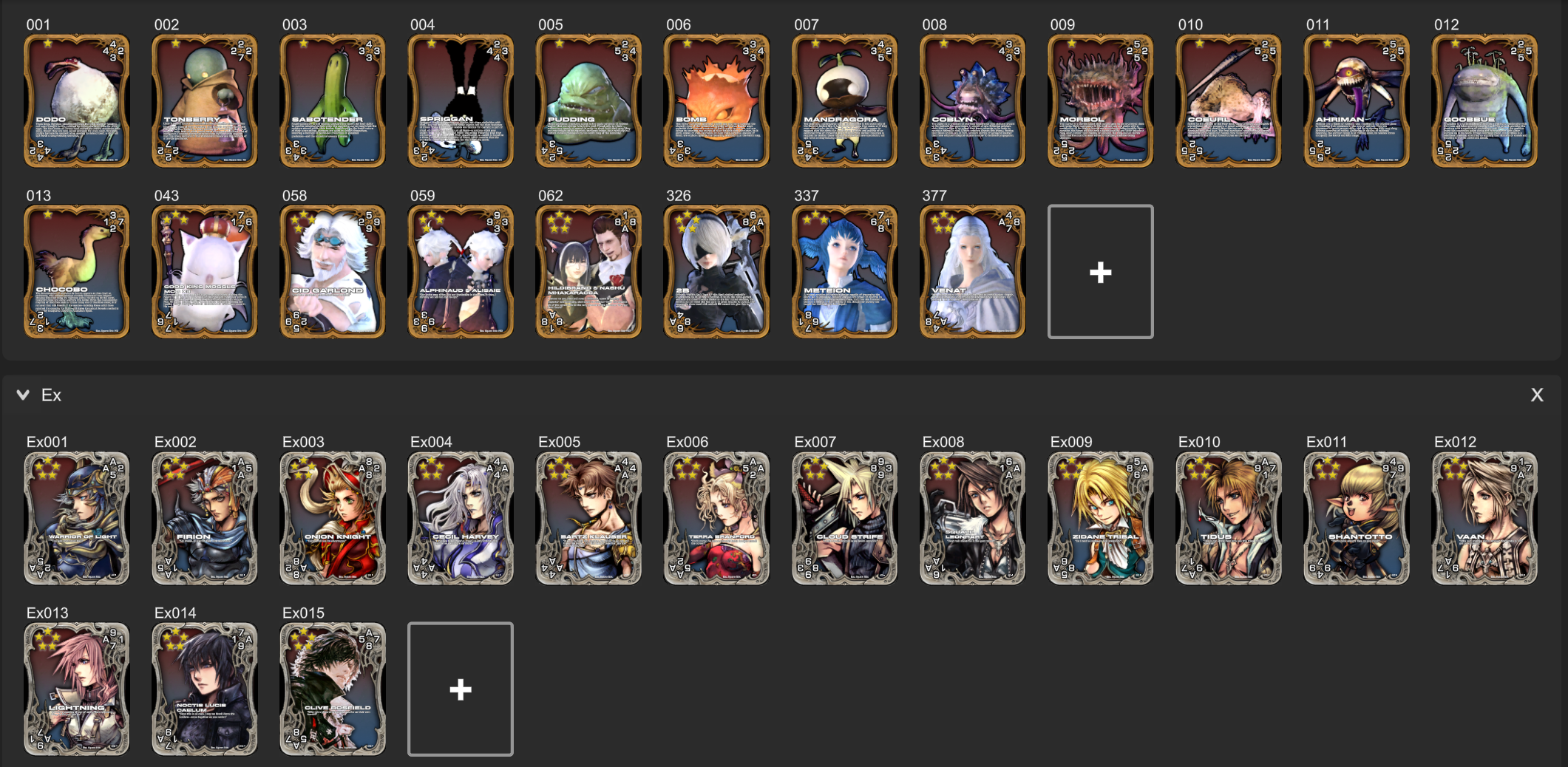
I wanted the cards to look close to their in game variants, so I opted to use some assets straight out of the game. - The Gray card background, Rarity Icon and type are available here. - The actual artwork of individual cards is available via xivapi here. Note they include the card border. - The card back is available here. - Fonts: - Eurostile for flavour text and numbers. - Miedninger for card names.
The card artworks as well as the card back textures are super low quality (208x256). To make them look good on actual cards I used a free upscaling tool called Upscayl. It can can also do bulk upscaling which was very useful for the massive amount of cards in the game. It also has a bunch of different models and options which allowed experimentation. I found the best choice for me was to do 4x resolution increase on the ultramix model.
I mostly used the original assets, added a rarity indicator and number values. I also decided to add flavour text with the card lore, which is usually not shown on the card itself, but only in the menu. This info can also be found in game or in this website. Also, I thought it would be a nice touch to add the card number and illustration credit in the corner, a bit like Pokémon cards!
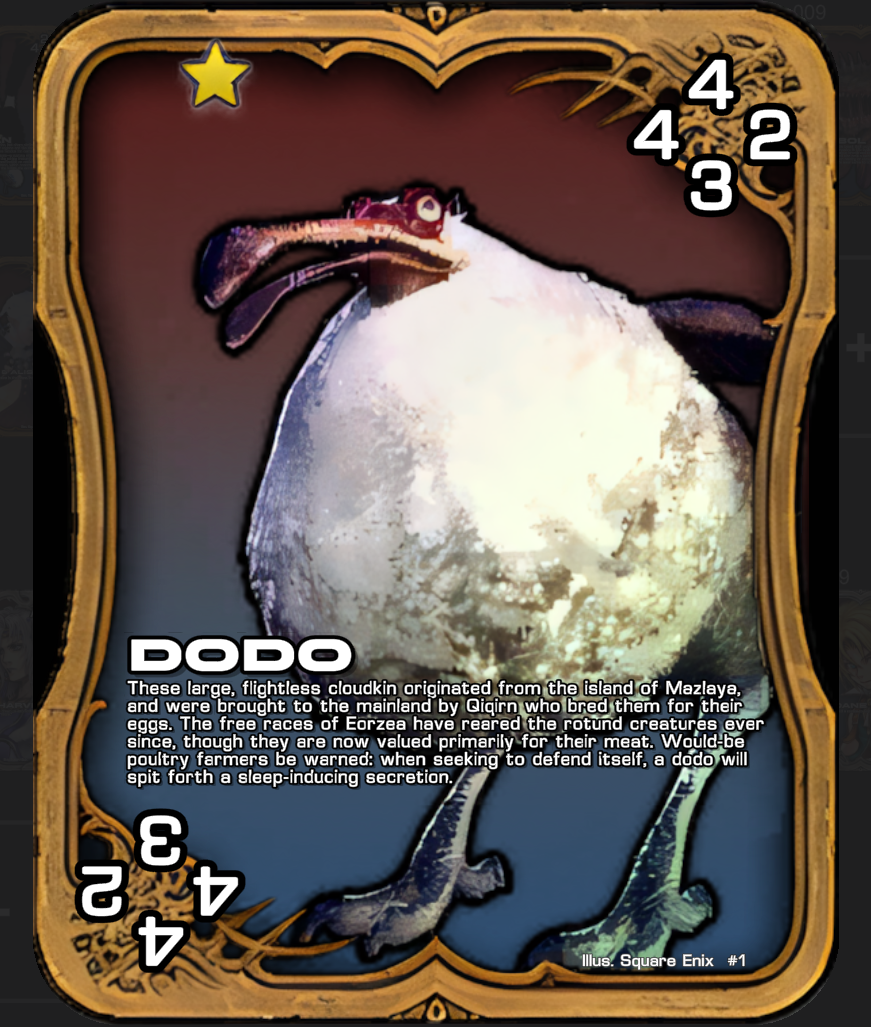
I tried to make the game be playable with the physical cards. If you played XIV's version of triple triad, you may know that the cards are two sided, with a blue side and red side to show to which player they belong. In fact, the cards are actually 3 sided! If you don't play with the All Open special rule, your opponents card's are not visible, and have a nondistinctive backside. I didn't want to force players to play with All Open, or to have to hide their hands. So the cards are designed to have a backside, and the front side is actually split so that the top is blue, and the bottom is red. So the red player has to play their cards upside down, and when each player captures a card of the opposite player they just flip them "horizontally". The bottom card Numbers on the design are also flipped so that they can be easily viewed when a card is flipped.
Also, that means both players have to sit next to each other when they play.
I used 4 layers in the assembly: - Standard paper A4 printed card fronts - 2x A4 Bristol paper (150g) - Standard paper A4 printed card backs
Between each layer I applied an adhesive spray to both sides that are to be glued. When you glue make sure that each A4 sheet is perfectly aligned. I found it easiest to first glue each printed paper to a Bristol and then glue both pairs of Bristols+Papers in the end. It's fine if it's not 100% aligned, since the card edges are black, so if you get a bit of white from non alignment you can just draw over it with a black marker and it will be practically invisible. This way the cards feel quite strong and sturdy, and the layers don't come apart. (Of course not quite to the level of factory made cards).
 Globe
Globe

